Concrete Retaining Systems: The Code-Backed Field Guide
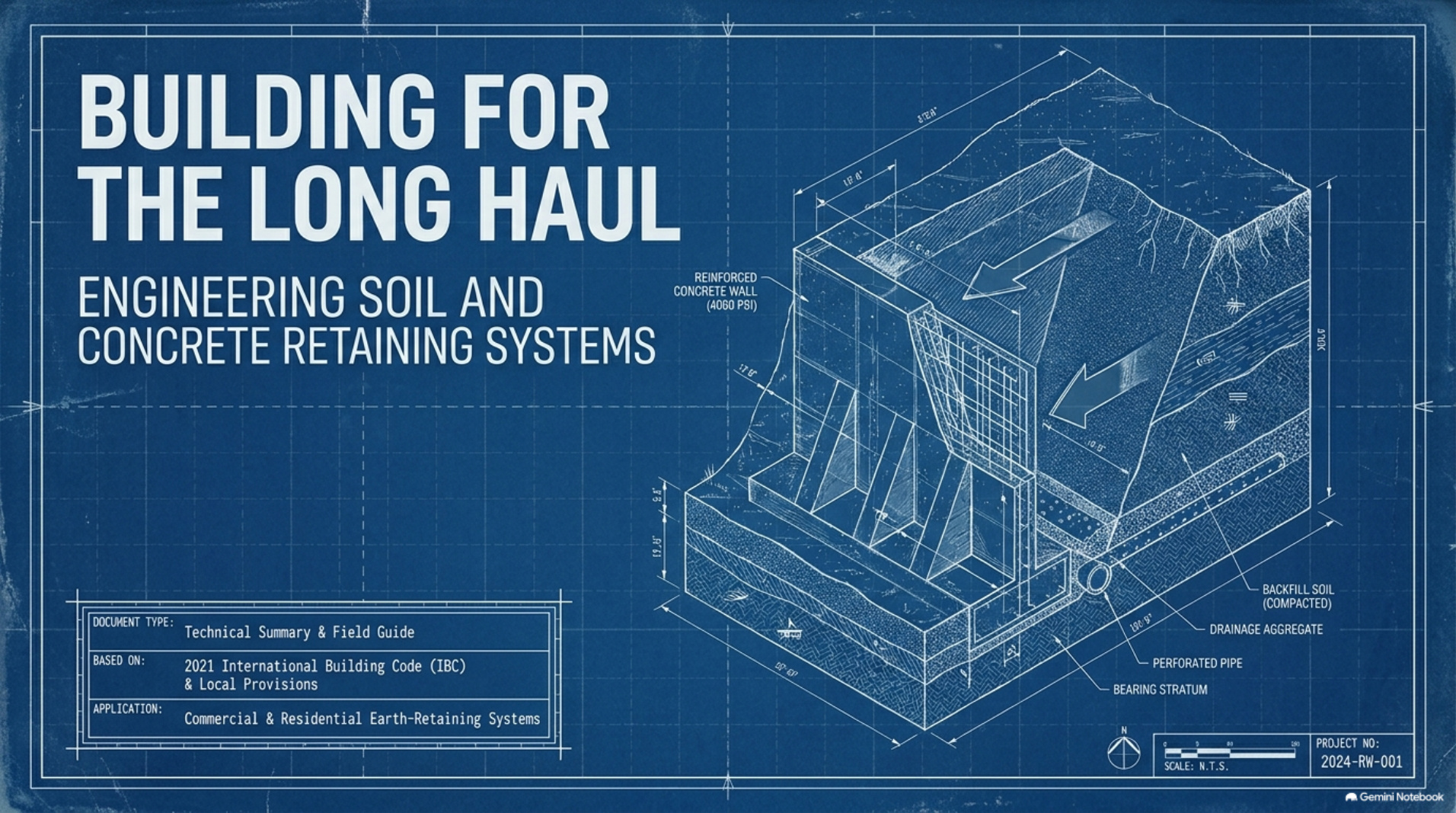
Retaining walls are engineering structures that most people treat as landscaping. A well-built concrete retaining system starts with the 2021 International Building Code and the local provisions that modify it — the load calculations, reinforcement requirements, and drainage mandates that keep a wall standing for decades instead of leaning after two winters.
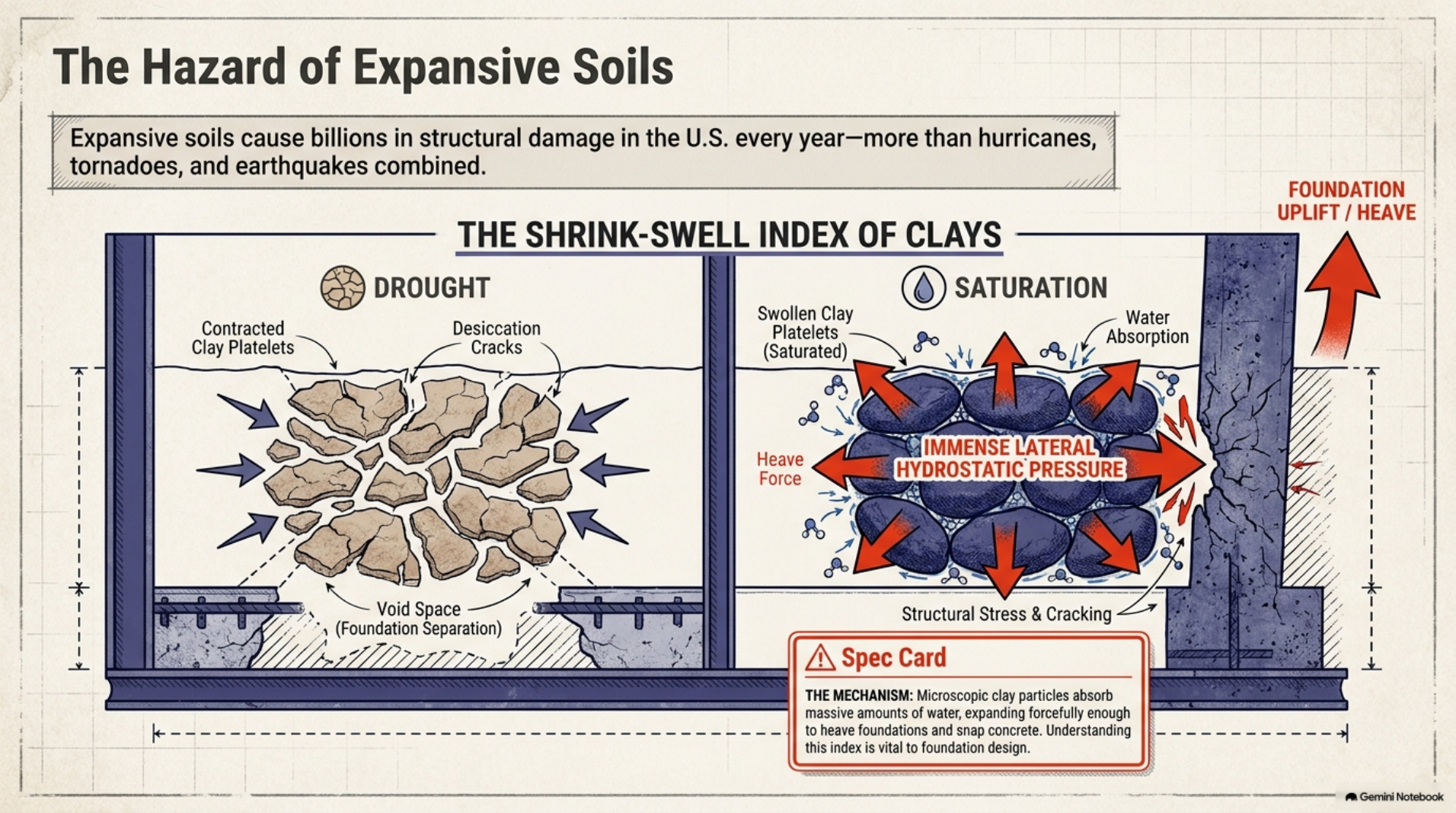
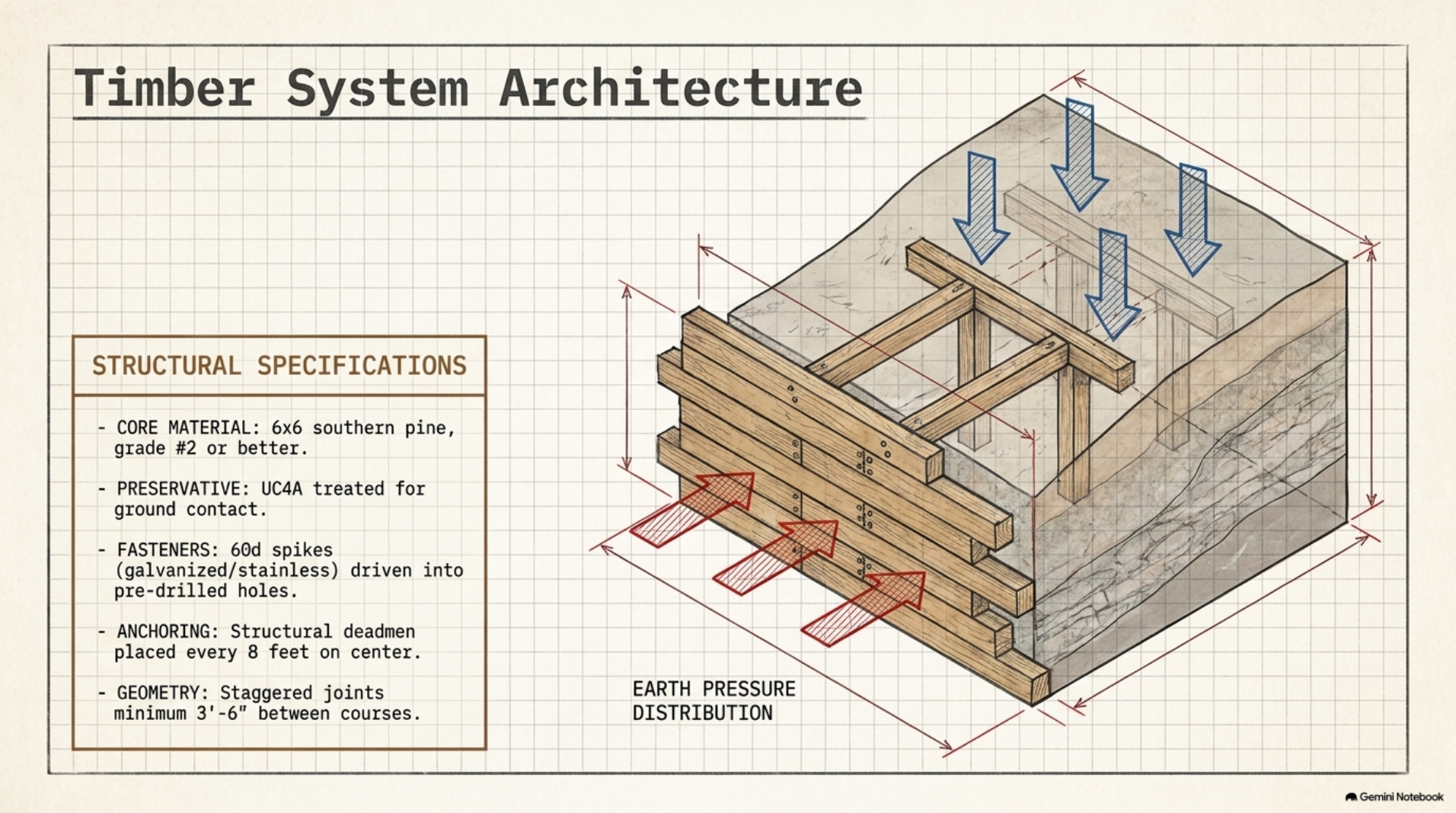
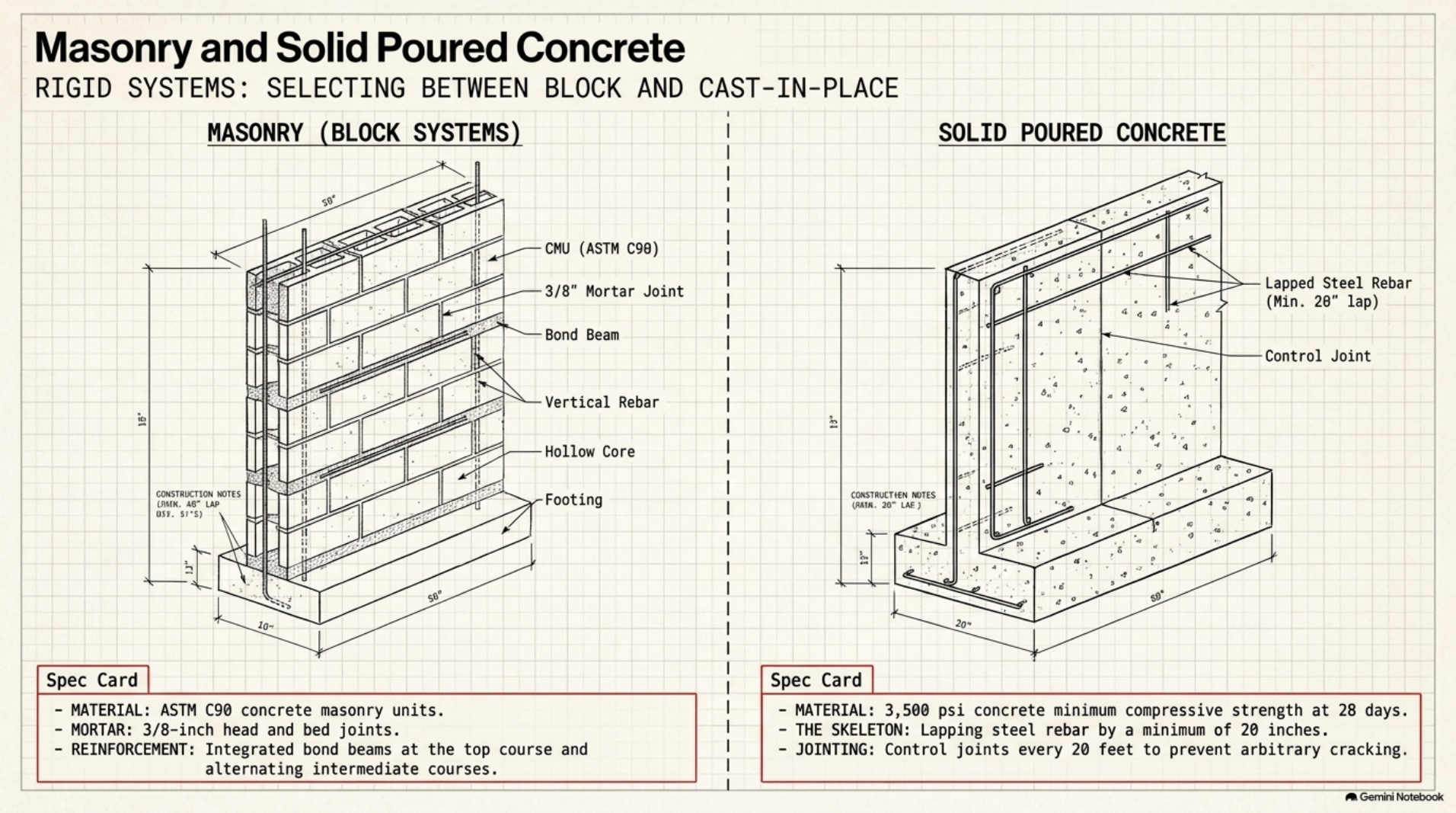
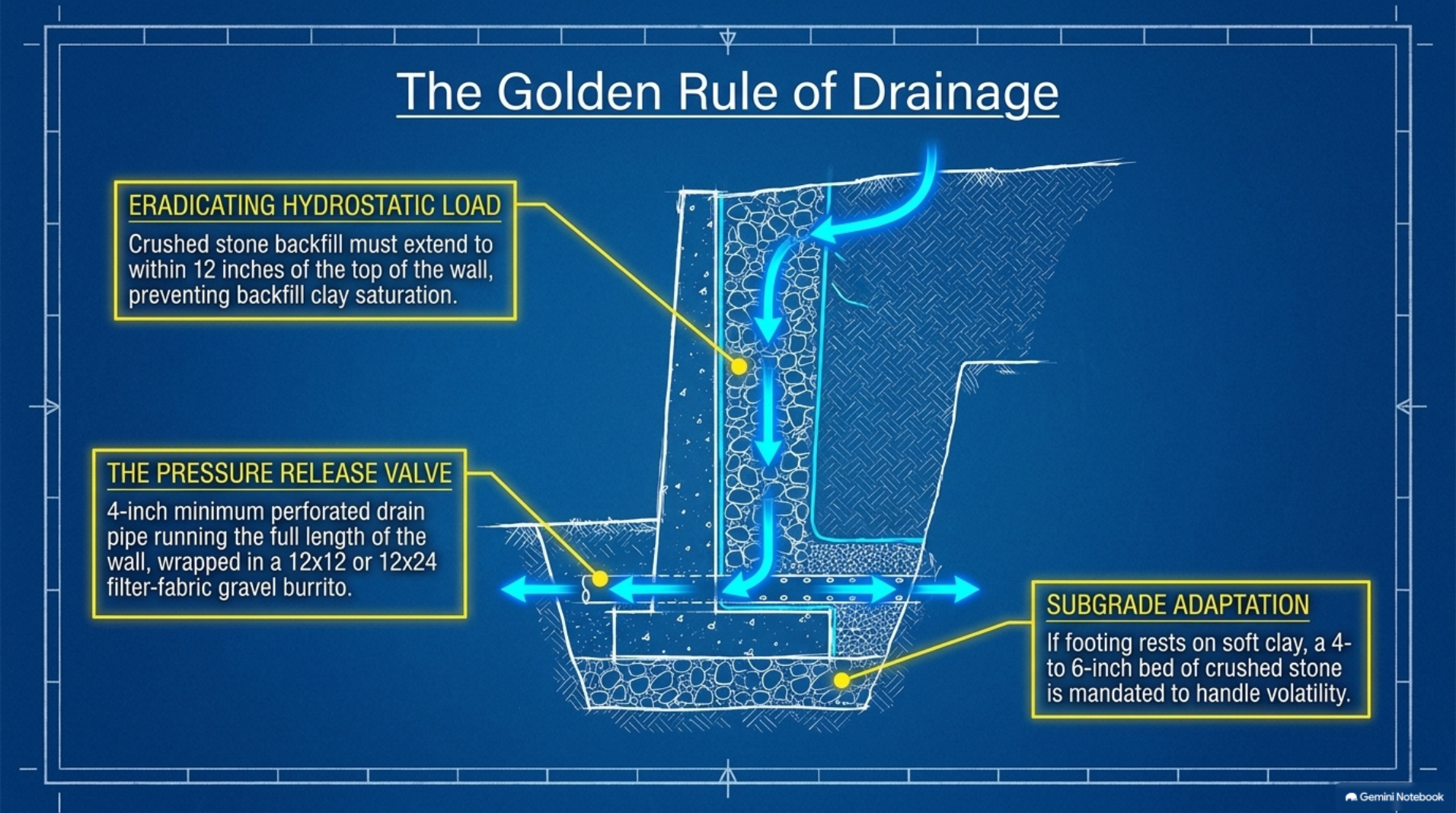
The field guide covers the practical side too: proper toe placement, drainage behind the wall (the number one killer of retaining structures), reinforcement detailing, and the difference between gravity walls, cantilevered walls, and mechanically stabilized systems.
The short version
- The guide frames retaining walls as engineering structures governed by the 2021 International Building Code and the local provisions that modify it.
- It covers load calculations, reinforcement requirements and drainage mandates as the factors that keep a wall standing for decades instead of leaning after two winters.
- Of all the failure modes covered, the guide identifies drainage behind the wall as the number one killer of retaining structures.
- The guide distinguishes gravity walls, cantilevered walls and mechanically stabilized systems, and covers toe placement, reinforcement detailing and field installation notes.
- Homeowners are told that a retaining wall quote omitting drainage, reinforcement and code compliance is not a quote but a liability transfer.
For a homeowner, the takeaway is simple: a retaining wall quote that doesn't mention drainage, reinforcement, and code compliance isn't a quote — it's a liability transfer. Any professional should be able to walk you through how their wall will satisfy the code that applies to your property.
Ready for a Professional Review?
We can connect you with vetted local professionals who work on projects like yours.
Get Matched with Local Pros